PROJECT INSPECTION / SANDBOX TRAIL GUIDE
Wildfrost
A demanding squad workshop built around visible attack timing. Companions and charms support coherent small engines, but the player must keep those engines protected and correctly sequenced throughout each expedition.
DEVELOPED BYDeadpan Games, Gaziter

Game facts
- Developer
- Deadpan Games, Gaziter
- Publisher
- Chucklefish
- Released
- 12 April 2023
- Platforms
- Windows (Steam edition)
- Model
- Paid game
- PEGI
- 7 — Nintendo Switch edition; not a separate PC classification
- Players
- Single-player
- Length
- Medium
- Difficulty
- 4 / 5 · Challenging
- Steam Deck
- Verified
PEGI source ↗ · Steam Deck status source ↗
Edition: Base game
The score, explained
The interest and responsiveness of the core decisions and actions.
How progression, exploration and goals fit together.
The coherence of the visual, musical and narrative presentation.
How clearly the game explains its rules and offers useful ways to engage.
The depth of optional goals, alternative approaches and reasons to return.
Timing changes the meaning of a turn
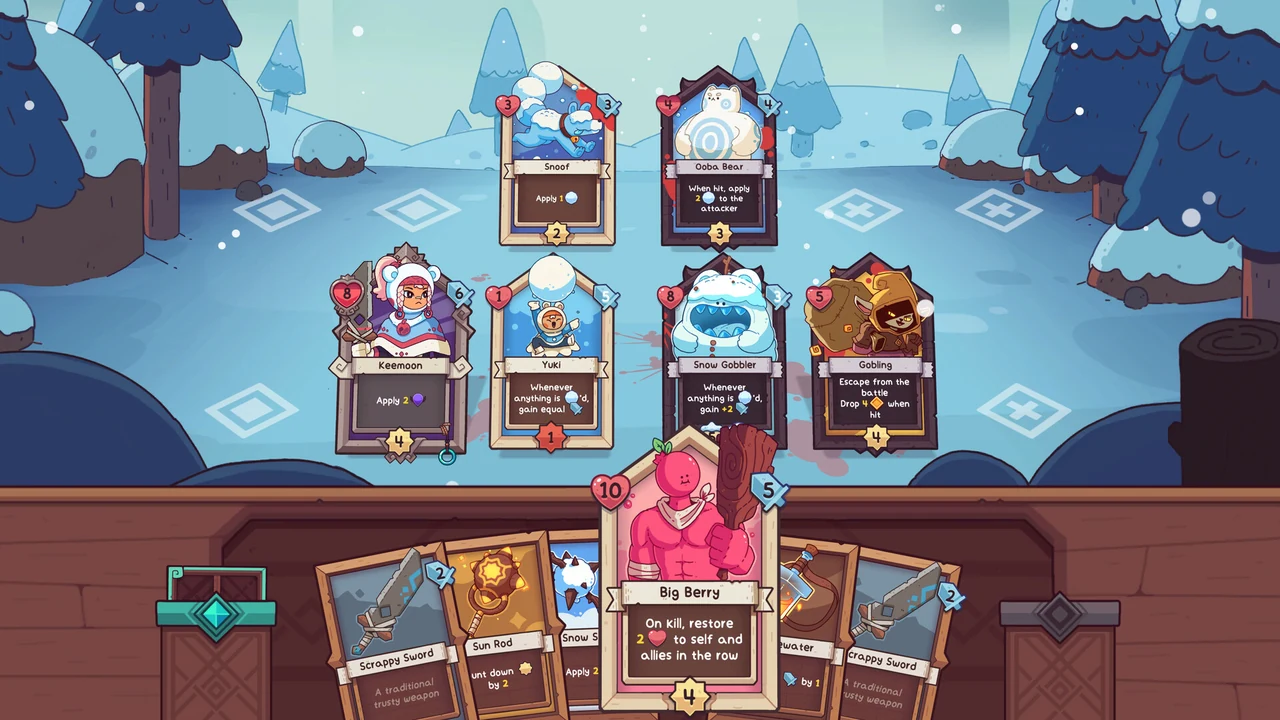
Wildfrost starts with a small group whose usefulness depends on more than the strength of an individual card. Companions have attack counters, positions affect who faces danger, and playing a card changes the timing of the board. The first battles therefore introduce a form of team construction: select a useful action while considering what the existing group will do next. A powerful companion can still be poorly supported, and immediate damage may be less valuable than preserving a favourable sequence. Rewards and charms gradually give the player more ways to shape that group. From a management perspective, the opening is about understanding the operating rhythm of a compact squad. Every addition needs a role, and that role must fit the timing and protection the rest of the team can realistically provide.
A deck grows around its companions
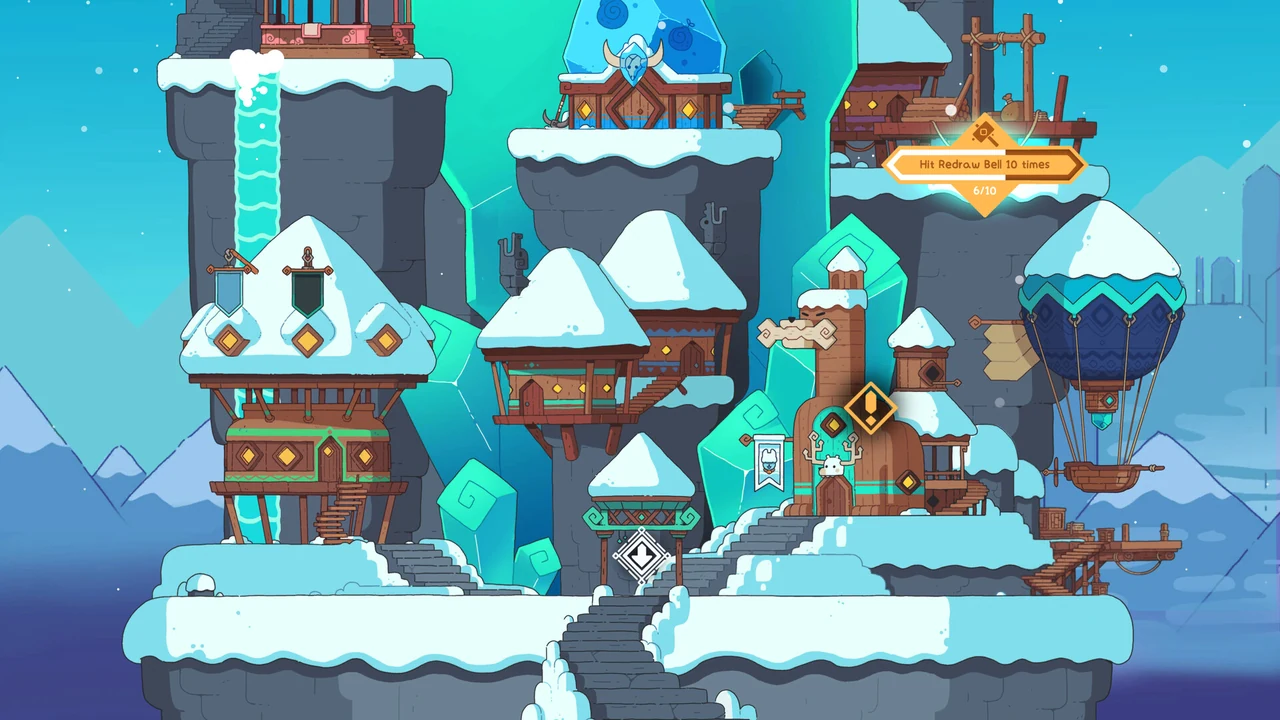
The visible counters make squad design unusually concrete. A card does not exist only as a possible draw; a companion already on the board is part of a schedule the player can influence. This gives positioning, protection and sequencing a shared purpose. Charms and new companions can develop a clear plan, but their value depends on how the resulting group functions together. The settlement's unlocks provide a broader context for repeated expeditions without replacing the immediate task of assembling a viable team. Wildfrost is especially interesting for builders who enjoy compact engines: a few related pieces can generate an effective pattern, while one poorly supported addition can create a weak point. The game rewards recognising those relationships before the board becomes crowded. Its tactical surface is colourful, but the deeper satisfaction lies in constructing a team whose timing makes sense.
Friendly shapes, serious decisions
The cheerful presentation should not be mistaken for a forgiving management loop. A missed counter or poorly protected companion can undermine a promising expedition quickly. Several interactions may become relevant at once, and adding more pieces can increase the burden of understanding the team rather than simply making it stronger. The player also builds from the opportunities offered during the run, so a preferred combination cannot be assumed to appear on demand. This limits the appeal for someone who wants a completely free deck workshop. Permanent consequences within an expedition make experimentation more serious than the artwork suggests. The game is generous with readable information, but reading it correctly remains work. Players who dislike recalculating the next sequence of actions may find that a carefully assembled team becomes stressful to operate when its timing grows complicated.
A reason to revise the next run
Wildfrost suits players who enjoy constructing a small group with clearly defined jobs. Choose it for the interaction between a companion's position, its timing and the support supplied by the deck. The best audience likes reviewing a system before committing another action, especially when an apparently strong upgrade could disturb an existing plan. It offers a useful change of scale from settlement management: the project is a squad, and its production is an effective sequence of attacks and defensive responses. Readers seeking unrestricted creativity or a relaxing collection game should weigh the expedition pressure carefully. The game expects its attractive components to be understood, not merely gathered. If building a coordinated team sounds more compelling than collecting the largest numbers, Wildfrost provides a focused and demanding framework for that interest.
The verdict
A demanding squad workshop built around visible attack timing. Companions and charms support coherent small engines, but the player must keep those engines protected and correctly sequenced throughout each expedition.
Reasons to play
- Counters make the team's operating rhythm visible
- Positioning and support give companions distinct practical roles
- Charms can strengthen a coherent plan without changing its scale
Reasons to think twice
- A single timing mistake can have lasting consequences
- More interacting pieces can make a team harder to manage
See the game
Assist & accessibility
Explore the available settings and control options on the official game page before choosing your setup.
Parents’ guide
Players: Single-player. No in-game purchase marker in the checked Steam listing. Separate downloadable content may be sold.
Age classification: 7. Nintendo Switch edition; not a separate PC classification
A useful starting tip
Check every relevant attack counter before spending a turn; the next automatic action may matter more than immediate damage.
A different direction
Compare this with Frostpunk: A powerful survival city builder where infrastructure and social policy are inseparable. Its coherent pressures make construction consequential, but the bleak tone leaves little room for carefree development.
Official sources
Reviewed: November 2026
You might also like
 DorfromantikRead review →
 Into the BreachRead review →
 Chicory: A Colorful TaleRead review →