PROJECT INSPECTION / SANDBOX TRAIL GUIDE
Dorfromantik
A satisfying landscape workshop with an approachable tile vocabulary. Objective play gives construction direction, while creative mode serves players more interested in composing a place than sustaining a run.
DEVELOPED BYToukana Interactive
Game facts
- Developer
- Toukana Interactive
- Publisher
- Toukana Interactive
- Released
- 28 April 2022
- Platforms
- Windows · macOS (Steam edition)
- Model
- Paid game
- PEGI
- 3 — Nintendo Switch edition; not a separate PC classification
- Players
- Single-player
- Length
- Medium
- Difficulty
- 2 / 5 · Approachable
- Steam Deck
- Verified
PEGI source ↗ · Steam Deck status source ↗
Edition: Base game
The score, explained
The interest and responsiveness of the core decisions and actions.
How progression, exploration and goals fit together.
The coherence of the visual, musical and narrative presentation.
How clearly the game explains its rules and offers useful ways to engage.
The depth of optional goals, alternative approaches and reasons to return.
A landscape made from decisions
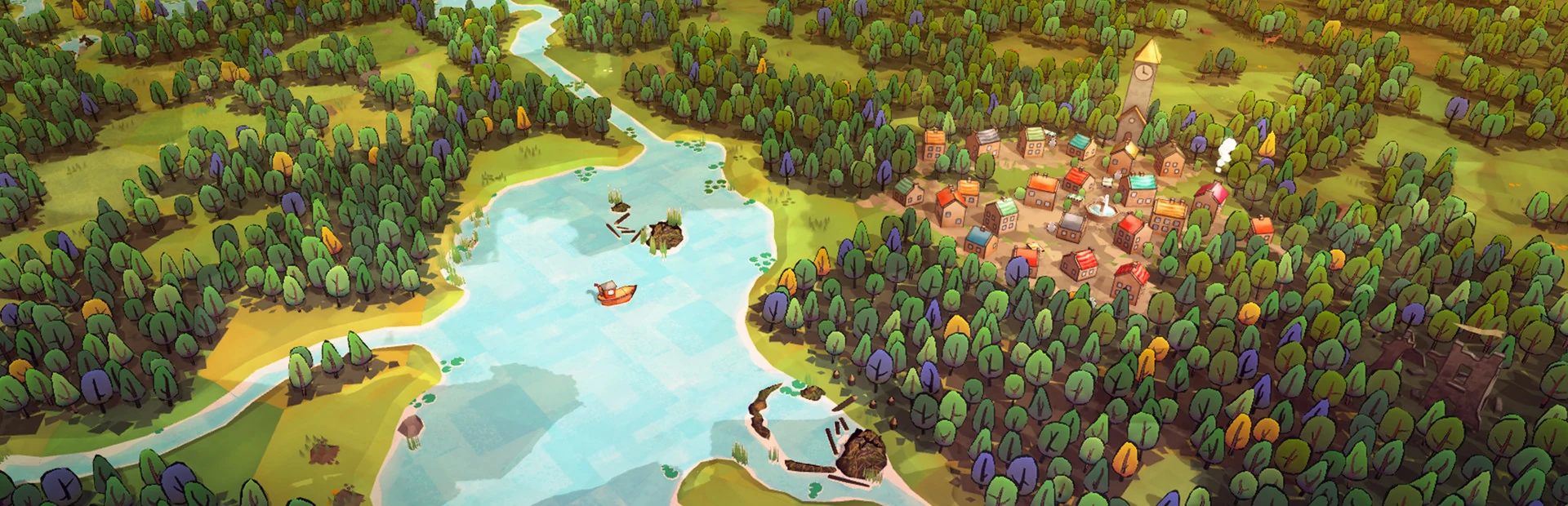
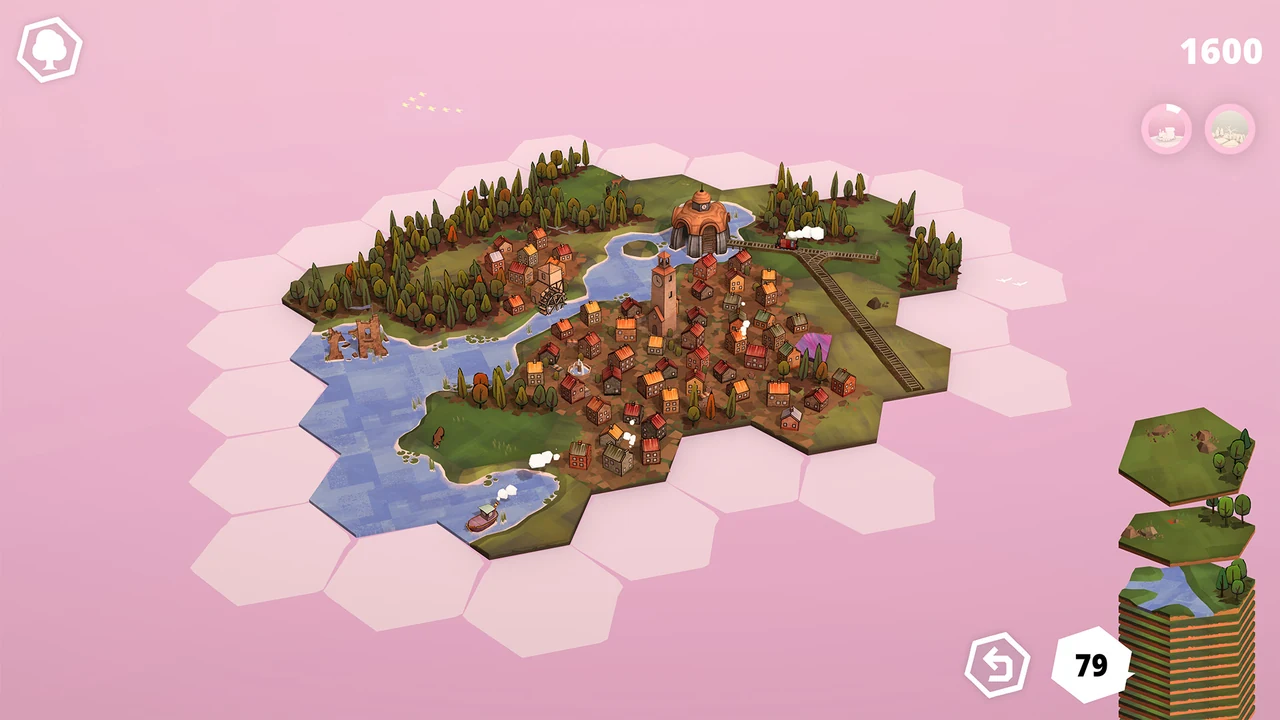
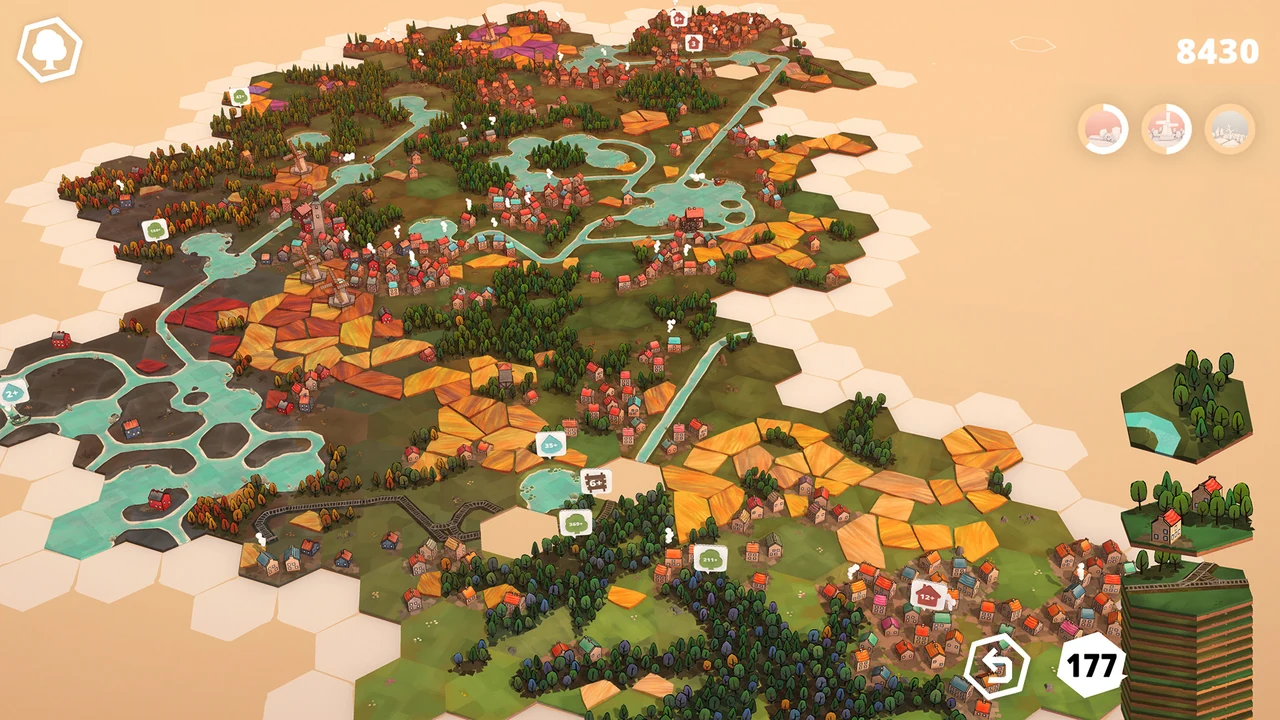
The first pleasure of Dorfromantik is simply watching separate pieces become a place. A few hexagons produce a village beside a forest, a field gains a neighbouring field, and a railway begins suggesting the shape of a larger region. The interface keeps construction immediate: select an orientation, choose a position and see the landscape extend. Objectives soon introduce a second consideration, because the available tiles must support the continuation of the run. A pleasant composition can leave inconvenient openings, and a useful objective may pull development away from the layout originally imagined. For a builder, this makes the opening a small negotiation between taste and opportunity. The game supplies the materials in an evolving sequence, while the player decides what kind of countryside can be made from them without exhausting the possibilities too quickly.
The next tile keeps the plan open
Dorfromantik captures an important part of building without simulating every part of a settlement. Adjoining features produce an instantly readable result, so a placement feels constructive even when it is strategically imperfect. The objective system gives that construction a light framework of priorities, rewarding the development of particular terrain while leaving substantial control over the overall composition. Its separate creative mode is valuable for players who want the arrangement itself to be the goal. That distinction gives the tools two useful contexts: one asks how to keep a landscape growing under constraints, while the other allows a preferred view to be pursued more freely. The scale remains manageable because the game focuses on relationships among tiles. There are no individual residents to administer, so attention stays on the shape, continuity and character of the land.
The board is worth looking at
Builders seeking a detailed working economy will quickly encounter the limits of the premise. A village is chiefly a landscape feature, not a population with a schedule, supply chain and political demands. The attraction rests on composition and placement, which may feel too slight if construction normally needs a complicated simulation underneath it. Objective play can also interfere with an attractive plan by making a particular connection more valuable than the scenery would suggest. Creative mode addresses the pressure, but removing constraints changes the motivation as well. The player must then enjoy setting a personal goal without expecting the game to define the next project. These are complementary modes with different rewards, and neither turns Dorfromantik into a broad city manager. Its restraint should be treated as a deliberate product boundary before choosing it for a building collection.
Choose a puzzle that leaves a place behind
Dorfromantik suits players who want the satisfaction of shaping a landscape without managing a large administrative machine. It is a good fit for an evening spent arranging villages, water and woodland into a coherent whole, especially when clear visual feedback matters more than numerical production. The constrained mode gives planners a reason to adapt, while creative play supports a more self-directed composition. Players who need individual citizens, detailed infrastructure or a campaign of expanding industrial challenges will probably want another kind of builder. The best reason to choose this one is the speed with which a small decision becomes a visible place. It offers a compact set of materials with enough relationships to make arranging them interesting. Bring either a willingness to improvise or a personal visual project, depending on which mode provides the stronger motivation.
The verdict
A satisfying landscape workshop with an approachable tile vocabulary. Objective play gives construction direction, while creative mode serves players more interested in composing a place than sustaining a run.
Reasons to play
- Each placement produces an immediate, readable landscape change
- Creative and objective modes support different building goals
- A focused toolset keeps construction easy to approach
Reasons to think twice
- Villages do not develop into a detailed citizen simulation
- Free construction depends on the player's own motivation
See the game
Assist & accessibility
Explore the available settings and control options on the official game page before choosing your setup.
Parents’ guide
Players: Single-player. No in-game purchase marker in the checked Steam listing. Separate downloadable content may be sold.
Age classification: 3. Nintendo Switch edition; not a separate PC classification
A useful starting tip
Consider the open edges you will leave behind before placing a tile that completes the most obvious immediate objective.
A different direction
Compare this with Tiny Glade: A delightful architectural sketchbook with responsive, characterful tools. It excels at turning small visual ideas into inviting places, while relying on personal creative goals instead of a campaign or economy.
Official sources
Reviewed: November 2026
You might also like
 Into the BreachRead review →
 Chicory: A Colorful TaleRead review →
 FrostpunkRead review →