PROJECT INSPECTION / SANDBOX TRAIL GUIDE
Tiny Glade
A delightful architectural sketchbook with responsive, characterful tools. It excels at turning small visual ideas into inviting places, while relying on personal creative goals instead of a campaign or economy.
DEVELOPED BYPounce Light
Game facts
- Developer
- Pounce Light
- Publisher
- Pounce Light
- Released
- 23 September 2024
- Platforms
- Windows · macOS · Linux (Steam edition)
- Model
- Paid game
- PEGI
- Not listed on Steam
- Players
- Single-player
- Length
- Short
- Difficulty
- 1 / 5 · Gentle
- Steam Deck
- Verified
PEGI source ↗ · Steam Deck status source ↗
Edition: Base game
The score, explained
The interest and responsiveness of the core decisions and actions.
How progression, exploration and goals fit together.
The coherence of the visual, musical and narrative presentation.
How clearly the game explains its rules and offers useful ways to engage.
The depth of optional goals, alternative approaches and reasons to return.
Doodle a place instead of managing it
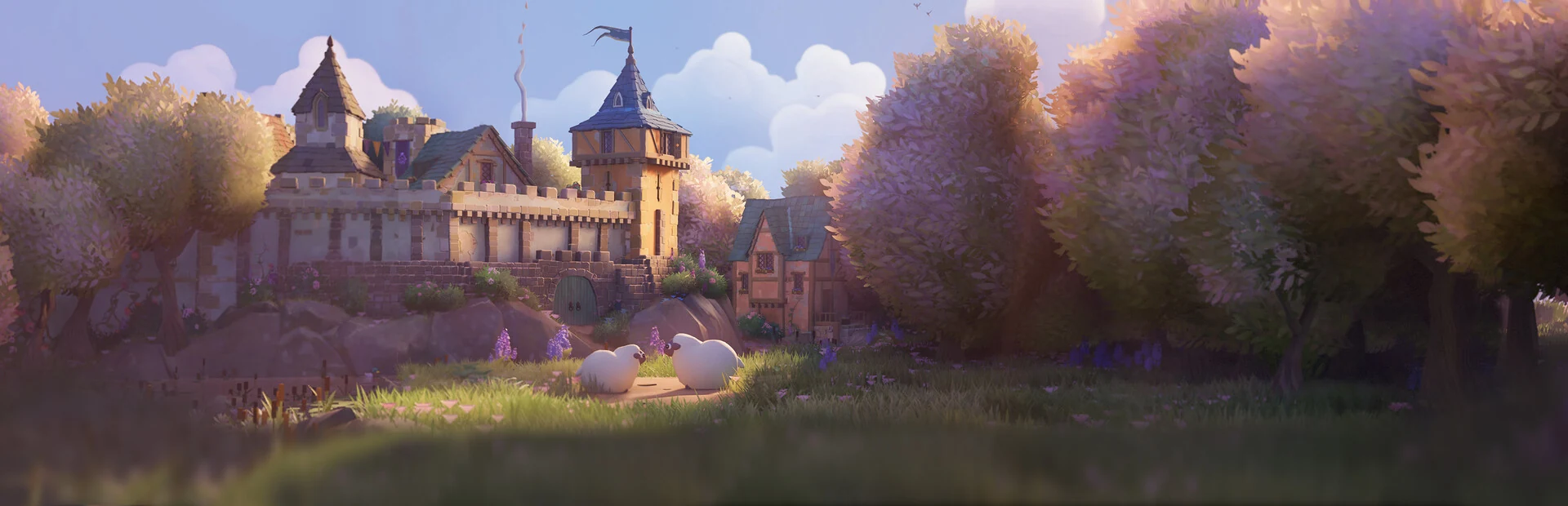
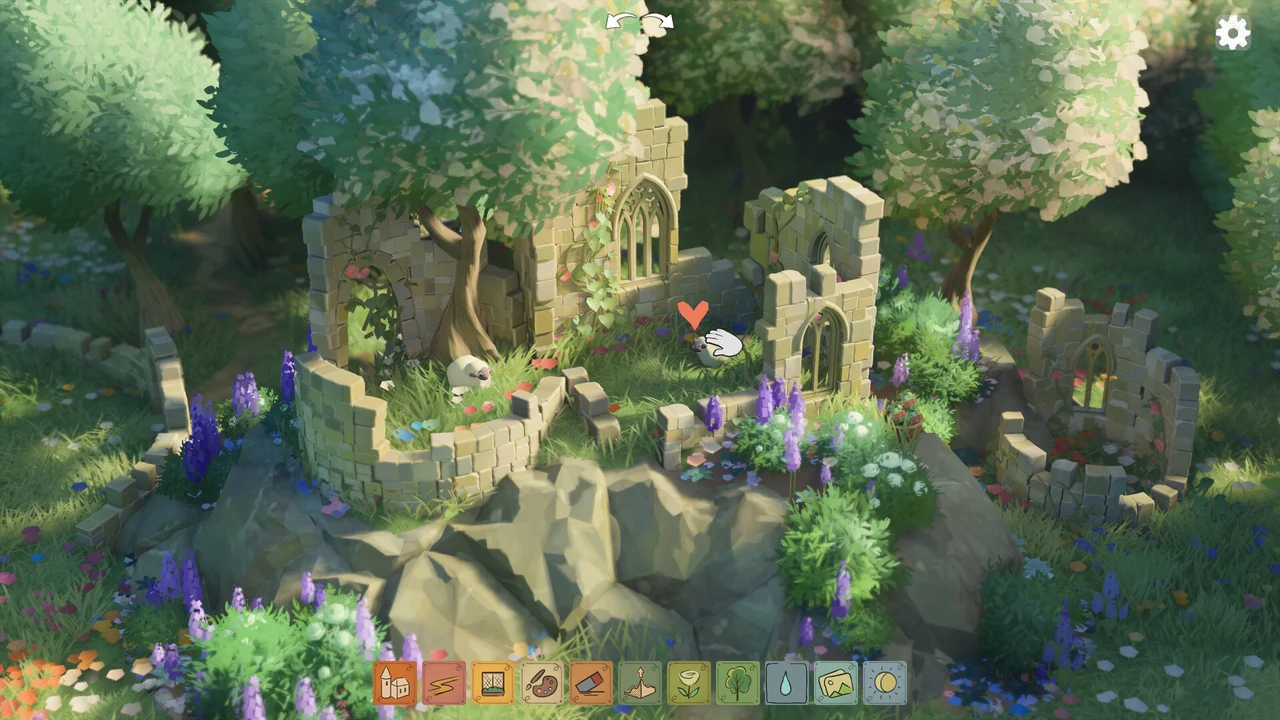
Tiny Glade opens with a place to shape rather than a crisis to solve. The tools invite buildings, paths, walls and landscape details to be adjusted directly, with the construction responding as the player experiments. A structure can change character when its height or surroundings change, and running a path through a building can produce a new architectural result. The early pleasure comes from testing these relationships without first earning resources or satisfying a population. This makes the first project approachable: a small tower, courtyard or cluster of buildings can become interesting through a few revisions. The player is free to linger over the composition instead of treating the opening as preparation for a later management phase. The essential habit is playful adjustment, watching how the building system interprets a shape and then refining the idea that emerges.
The next objective is your own idea
Its most attractive feature is the amount of architectural character produced by a compact set of interactions. The tools handle many details responsively, allowing the player to focus on massing, arrangement and atmosphere instead of placing every small component manually. This gives experimentation a low practical cost. Changing a wall or path can reveal a better idea before the original plan has become precious, and a modest structure can quickly acquire a convincing relationship with its surroundings. The absence of resource management is central to that freedom. There is no economy to stabilise before the composition can receive attention. Tiny Glade works especially well as a visual workshop because it makes revision feel like part of the creative process, not a penalty. The result is a builder concerned with how a place looks and feels, supported by tools that supply coherent detail as the plan develops.
Detail is the response to your actions
The same responsiveness that makes construction inviting also limits exact authorship. The system interprets shapes and relationships, so the result may not match every architectural detail the player imagined. It is better approached as a collaborator with a particular visual vocabulary than as a precise professional modelling tool. There is also no conventional campaign or resource economy to create a sequence of external goals. A finished-looking composition does not unlock a deeper management challenge; deciding what to build next remains the player's responsibility. Readers who need simulated residents, production chains or explicit victory conditions may therefore exhaust their motivation quickly. The game is deliberately specialised in making attractive small places. Its appeal depends on enjoying that activity enough to supply personal prompts, experiment with the tools and accept that some of the final detailing is shaped by the system's own preferences.
Return when another scene occurs to you
Choose Tiny Glade when the desired reward is a place you are pleased to look at. It is particularly suitable for builders who enjoy sketching architectural ideas, adjusting a silhouette and discovering how a path or courtyard changes a scene. The lack of economic pressure makes it welcoming for experimentation, but also means personal curiosity must provide the project brief. Players who prefer managing populations or optimising production should choose a game built around those responsibilities. This one offers a focused creative workshop. It can be valuable precisely because a small idea is enough to begin: a gate, a tower or a sheltered space can develop into a complete composition through a series of adjustments. Bring an appetite for visual exploration and a willingness to work with the toolset's responsive architectural character, rather than expecting unrestricted simulation or exact technical modelling.
The verdict
A delightful architectural sketchbook with responsive, characterful tools. It excels at turning small visual ideas into inviting places, while relying on personal creative goals instead of a campaign or economy.
Reasons to play
- Responsive detailing gives simple shapes architectural character
- No resource economy stands between an idea and an experiment
- Small revisions can substantially improve a composition
Reasons to think twice
- The system's interpretation limits exact control over every detail
- Long-term motivation depends on self-directed building projects
See the game

Assist & accessibility
Parents’ guide
Players: Single-player. No in-game purchase marker in the checked Steam listing. Separate downloadable content may be sold.
Age classification: Not listed on Steam.
A useful starting tip
Try running a path through an existing structure, then change its height to see how the building system adapts the details.
A different direction
Compare this with Dorfromantik: A satisfying landscape workshop with an approachable tile vocabulary. Objective play gives construction direction, while creative mode serves players more interested in composing a place than sustaining a run.
Official sources
Reviewed: November 2026
You might also like
 DorfromantikRead review →
 Into the BreachRead review →
 Chicory: A Colorful TaleRead review →