PROJECT INSPECTION / SANDBOX TRAIL GUIDE
Mini Motorways
An engaging infrastructure workshop where every road has an operational consequence. Rapid construction and visible traffic make redesign rewarding, while uncontrolled growth keeps the city from becoming a permanent blueprint.
DEVELOPED BYDinosaur Polo Club

Game facts
- Developer
- Dinosaur Polo Club
- Publisher
- Dinosaur Polo Club
- Released
- 20 July 2021
- Platforms
- Windows · macOS (Steam edition)
- Model
- Paid game
- PEGI
- 3 — Nintendo Switch edition; not a separate PC classification
- Players
- Single-player
- Length
- Short
- Difficulty
- 3 / 5 · Moderate
- Steam Deck
- Verified
PEGI source ↗ · Steam Deck status source ↗
Edition: Base game
The score, explained
The interest and responsiveness of the core decisions and actions.
How progression, exploration and goals fit together.
The coherence of the visual, musical and narrative presentation.
How clearly the game explains its rules and offers useful ways to engage.
The depth of optional goals, alternative approaches and reasons to return.
Draw a road, change the whole network
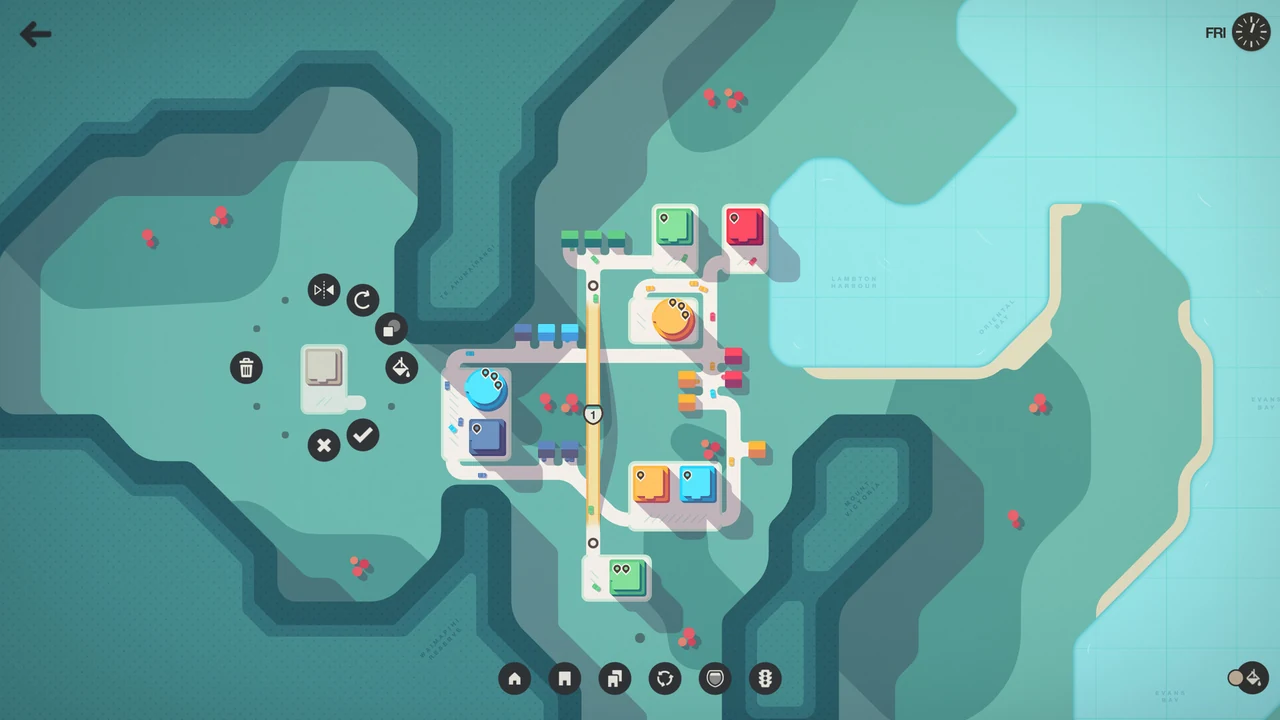
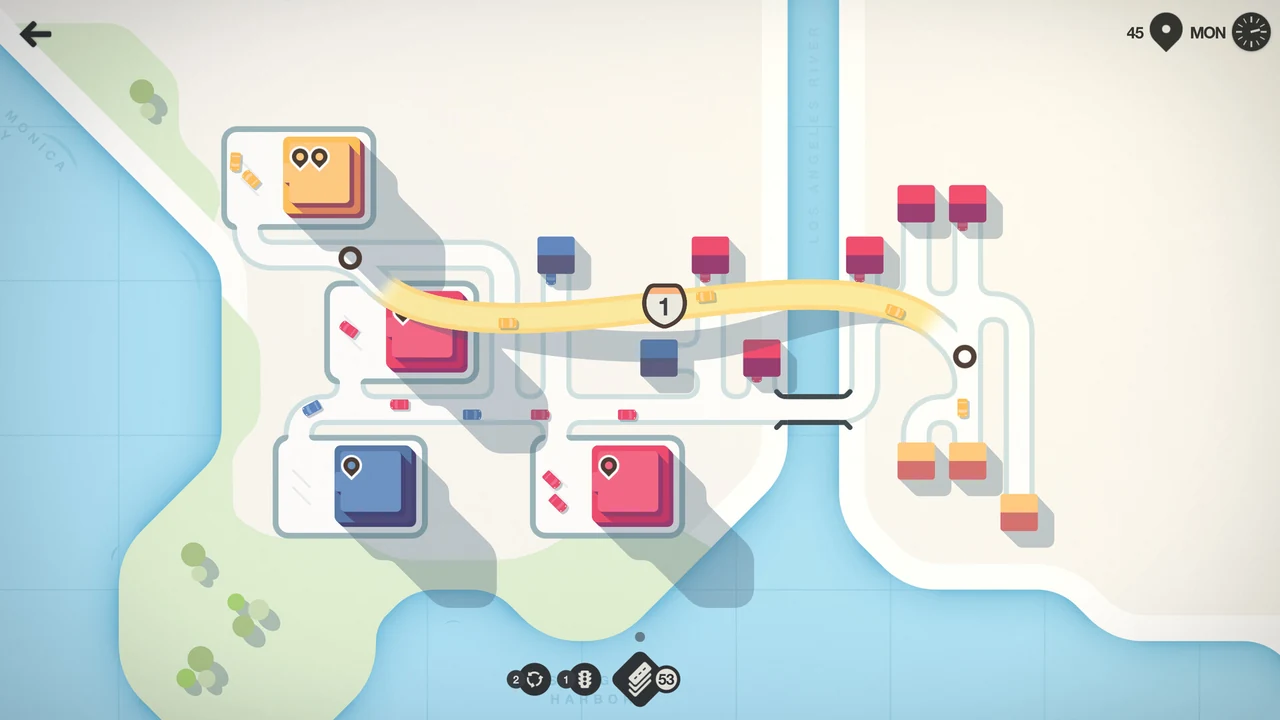
Building a city in Mini Motorways means building its circulation. Houses and destinations appear on the map, leaving the player to draw the roads that make their relationship workable. The first connections are uncomplicated, but the settlement soon develops faster than a single tidy route can comfortably serve. A junction that saved road pieces may become a meeting point for too many journeys, while a new destination can make an established district suddenly less convenient. The opening introduces management through this visible accumulation of consequences. Resources are limited, so expanding the network and improving its organisation compete for the same attention. For a builder, the important first lesson is that every road creates a continuing obligation. The city will keep using that connection, including after the surrounding demand has changed considerably.
Choose pressure or room to experiment
Mini Motorways makes infrastructure feel like an active design decision. Roads are easy to draw and revise, yet their arrangement strongly affects how the growing city behaves. The useful construction problem is not merely reaching a building; it is deciding which journeys should share space and which need a more direct route. Upgrades offer additional tools without removing the need for organisation, and different maps make water, distance and limited crossings matter in different ways. Traffic provides a live demonstration of the current design. A successful revision can visibly reduce pressure, giving management a satisfying practical feedback loop. The scope is narrow enough that the player can understand the system as a whole, while the ongoing growth prevents it from becoming static. This is infrastructure management distilled into a clear relationship between a drawn plan and the movement it produces.
A readable city in miniature
The city is not under the player's complete control. New buildings can appear where they complicate an otherwise sensible layout, making adaptation more important than protecting a carefully imagined master plan. That uncertainty is central to the challenge, but it can irritate builders who prefer to zone development themselves. The transport model also has its own behaviour, and an attractive road drawing does not guarantee efficient movement. Diagnosing a congested network may require watching several problems unfold while demand continues to rise. Players looking for a complete municipal simulation will find the range of responsibilities limited: housing, industry and civic services primarily matter through their transport needs. The game offers a concentrated infrastructure task, not the freedom to develop every aspect of a city. Its strongest appeal depends on enjoying revision under increasing operational pressure.
For planners who like revising their work
Choose Mini Motorways if the most satisfying part of a builder is making its infrastructure function. It is a good match for players who enjoy separating traffic, improving a bottleneck and seeing a practical result soon after a change. The clean interface lowers the effort required to start a new plan, but the growing city supplies enough pressure to make that plan consequential. Readers who want complete authority over zoning or long stretches of peaceful decorative construction should approach with different expectations. The game provides a responsive network to manage, not a city that will patiently wait for an ideal arrangement. Its best audience is comfortable dismantling a once-useful connection when circumstances change. For that kind of builder, the continuous cycle of construction, observation and redesign can be exceptionally absorbing.
The verdict
An engaging infrastructure workshop where every road has an operational consequence. Rapid construction and visible traffic make redesign rewarding, while uncontrolled growth keeps the city from becoming a permanent blueprint.
Reasons to play
- Road changes produce visible effects on traffic
- Limited infrastructure tools encourage purposeful organisation
- Different city geography changes the construction brief
Reasons to think twice
- The player cannot choose every new building location
- Transport management is the main responsibility, not a full city simulation
See the game
Assist & accessibility
Explore the available settings and control options on the official game page before choosing your setup.
Parents’ guide
Players: Single-player. No in-game purchase marker in the checked Steam listing. Separate downloadable content may be sold.
Age classification: 3. Nintendo Switch edition; not a separate PC classification
A useful starting tip
Look at where traffic converges before extending a road; a convenient connection now can create a bottleneck as the city grows.
A different direction
Compare this with Mini Metro: A sharply focused transit builder that makes the network itself the construction project. Its clean diagram supports meaningful operational decisions, with continual growth preventing a tidy plan from remaining finished.
Official sources
Reviewed: November 2026
You might also like
 DorfromantikRead review →
 Into the BreachRead review →
 Chicory: A Colorful TaleRead review →