PROJECT INSPECTION / SANDBOX TRAIL GUIDE
Loop Hero
An unusual builder in which the landscape is both an opportunity and a threat. Terrain relationships and camp development reward careful system design, although indirect control and resource repetition can slow the process.
DEVELOPED BYFour Quarters
Game facts
- Developer
- Four Quarters
- Publisher
- Devolver Digital
- Released
- 4 March 2021
- Platforms
- Windows · macOS · Linux (Steam edition)
- Model
- Paid game
- PEGI
- 12 — Nintendo Switch edition; not a separate PC classification
- Players
- Single-player
- Length
- Long
- Difficulty
- 2 / 5 · Moderate
- Steam Deck
- Playable
PEGI source ↗ · Steam Deck status source ↗
Edition: Base game
The score, explained
The interest and responsiveness of the core decisions and actions.
How progression, exploration and goals fit together.
The coherence of the visual, musical and narrative presentation.
How clearly the game explains its rules and offers useful ways to engage.
The depth of optional goals, alternative approaches and reasons to return.
You design the trouble ahead
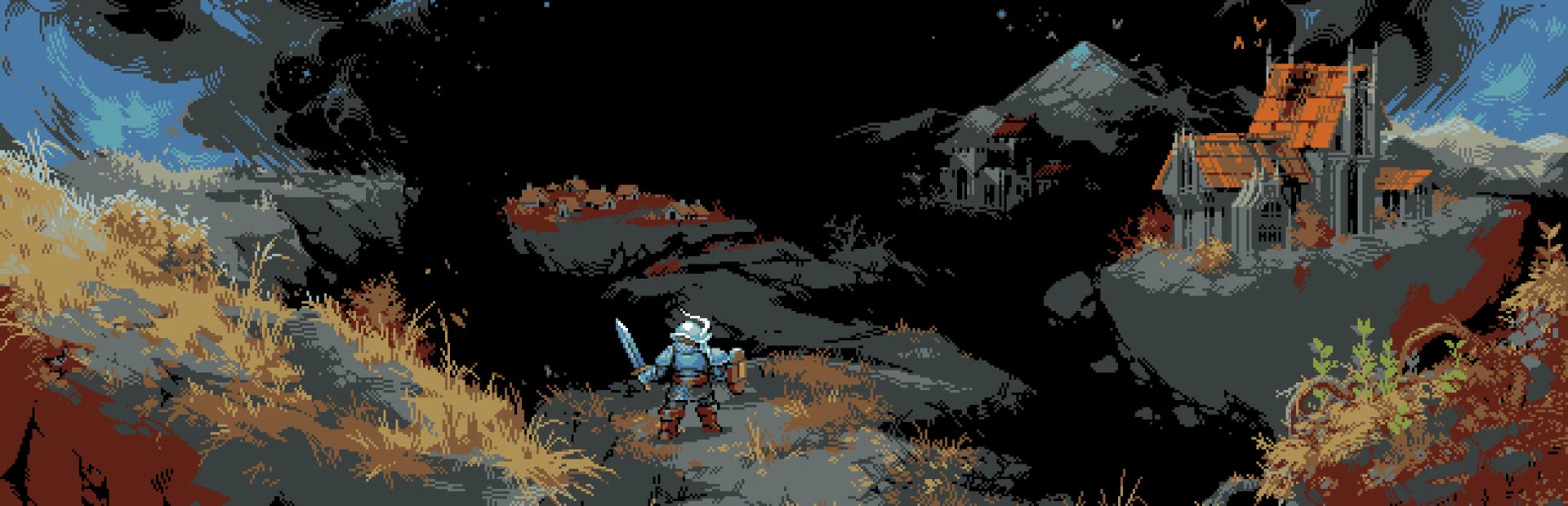
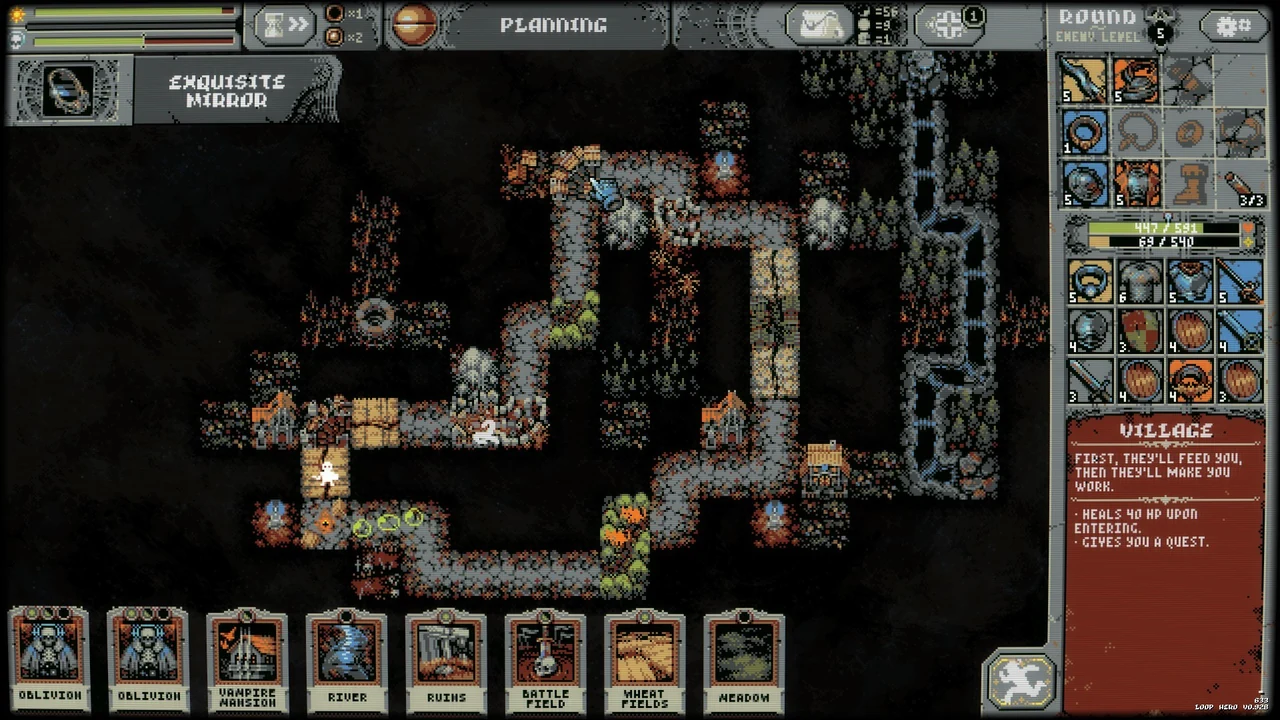
Loop Hero begins with an expedition whose road is also the player's construction site. The hero moves automatically, but terrain cards allow the surrounding route to be developed into something more profitable and more dangerous. Equipment recovered during the journey changes the traveller's prospects, while resources brought home contribute to the camp. The opening therefore establishes two projects at different scales. One is the temporary environment through which the hero must keep moving; the other is the base that supports future expeditions. Placing a tile is not simply expanding the scenery. It introduces a continuing effect that may become more significant after another lap. For a builder, the early challenge is to resist creating every available opportunity immediately and instead develop a route whose benefits, encounters and equipment demands can remain manageable together.
An expedition is part of a larger plan
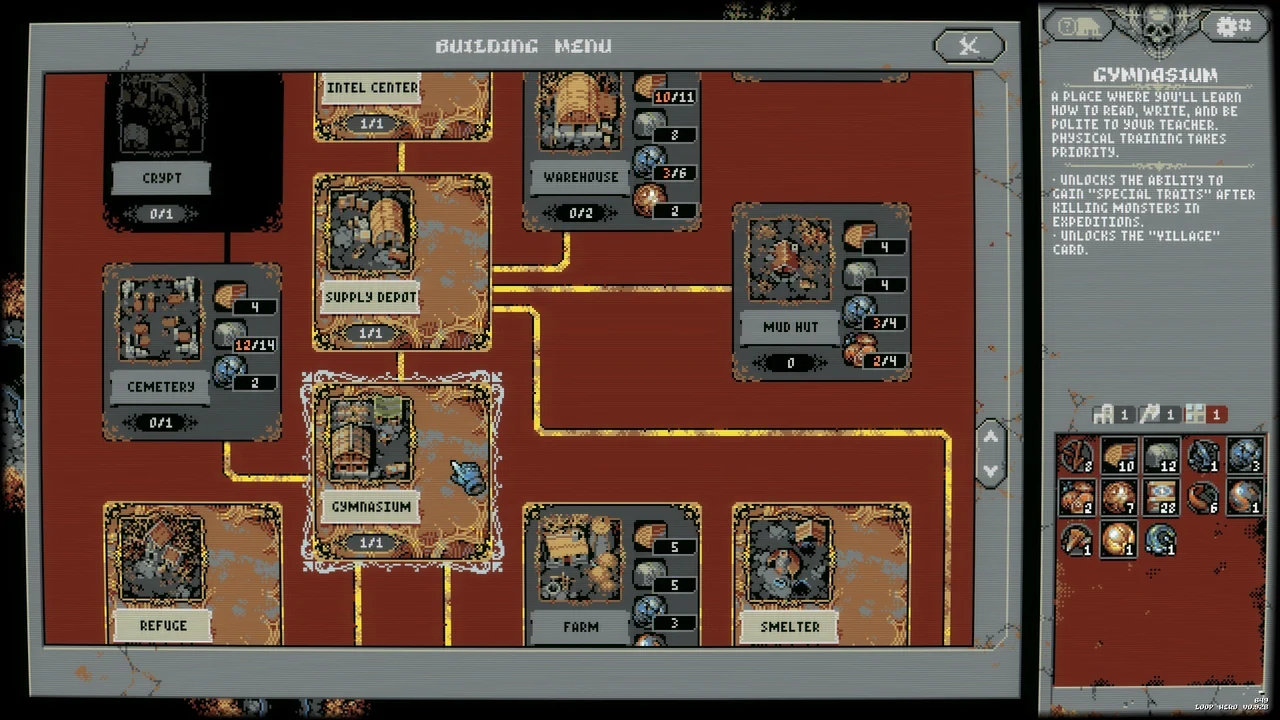
The construction is interesting because growth and danger are inseparable. Adding terrain can improve the expedition's potential while also changing what the hero must withstand. Tile combinations provide further relationships to investigate, making the landscape a working system rather than a decorative board. Camp development gives recovered materials a continuing purpose, so each expedition can contribute to a broader plan even when its immediate arrangement is imperfect. Different classes and card selections change the sort of route worth constructing. The player is repeatedly asked to design an environment that supports the traveller's current capabilities. This is an unusual form of management: you create part of the pressure, then judge whether the equipment and preparation are sufficient to handle it. The appeal comes from balancing a productive landscape against the cost of asking the hero to traverse it again.
A ruined world expressed as a system
Loop Hero provides only indirect control over the traveller's survival. Once the route and equipment have established a situation, the player cannot solve every problem through precise movement or a last-second attack. That distance makes planning important, but it can also make a failed expedition feel like watching a design mistake unfold slowly. The camp's resource requirements encourage repeated journeys, and players may sometimes understand the needed improvement before they have gathered enough to build it. The result can feel like maintenance between more interesting experiments. There is also little scope for constructing a peaceful place purely for appearance. The terrain exists within an expedition economy, and its value is measured largely through the interactions it produces. Builders who need immediate intervention, extensive decorative freedom or a steadily expanding permanent landscape should recognise those limits before committing to the loop.
Return with a different hypothesis
Choose Loop Hero if you enjoy creating a system and learning from the way it operates without constant direct input. It suits builders who find combinations, risk management and resource recovery more engaging than controlling a character's every movement. The camp provides a persistent project, while individual routes allow new arrangements to be tested. Players who dislike repeated preparation or want a single world to develop indefinitely should consider a different structure. Here, each expedition is a provisional design with a practical stopping point. The strongest audience will enjoy deciding how much growth the current setup can safely support. A well-judged retreat can therefore feel as constructive as another successful lap, because it preserves the materials that make the next project possible and confirms where the present design has reached its useful limit.
The verdict
An unusual builder in which the landscape is both an opportunity and a threat. Terrain relationships and camp development reward careful system design, although indirect control and resource repetition can slow the process.
Reasons to play
- Expedition terrain creates meaningful relationships between growth and danger
- Camp construction gives recovered resources a continuing purpose
- Different setups encourage new kinds of route design
Reasons to think twice
- The hero's automatic actions limit emergency intervention
- Gathering materials can separate an identified improvement from building it
See the game
Assist & accessibility
Explore the available settings and control options on the official game page before choosing your setup.
Parents’ guide
Players: Single-player. No in-game purchase marker in the checked Steam listing. Separate downloadable content may be sold.
Age classification: 12. Nintendo Switch edition; not a separate PC classification
A useful starting tip
Think about the danger a new tile creates across several laps, not only the reward it offers immediately.
A different direction
Compare this with Against the Storm: A rich settlement manager that keeps the difficult establishment phase at the centre. Varied populations and production options reward adaptable plans, provided repeated rebuilding is part of the appeal.
Official sources
Reviewed: November 2026
You might also like
 DorfromantikRead review →
 Into the BreachRead review →
 Chicory: A Colorful TaleRead review →