PROJECT INSPECTION / SANDBOX TRAIL GUIDE
Against the Storm
A rich settlement manager that keeps the difficult establishment phase at the centre. Varied populations and production options reward adaptable plans, provided repeated rebuilding is part of the appeal.
DEVELOPED BYEremite Games

Game facts
- Developer
- Eremite Games
- Publisher
- Hooded Horse
- Released
- 8 December 2023
- Platforms
- Windows (Steam edition)
- Model
- Paid game
- PEGI
- 12 · Bad Language, In-Game Purchases — Steam UK listing
- Players
- Single-player
- Length
- Long
- Difficulty
- 4 / 5 · Challenging
- Steam Deck
- Playable
PEGI source ↗ · Steam Deck status source ↗
Edition: Base game
The score, explained
The interest and responsiveness of the core decisions and actions.
How progression, exploration and goals fit together.
The coherence of the visual, musical and narrative presentation.
How clearly the game explains its rules and offers useful ways to engage.
The depth of optional goals, alternative approaches and reasons to return.
Build a settlement, then learn to begin again
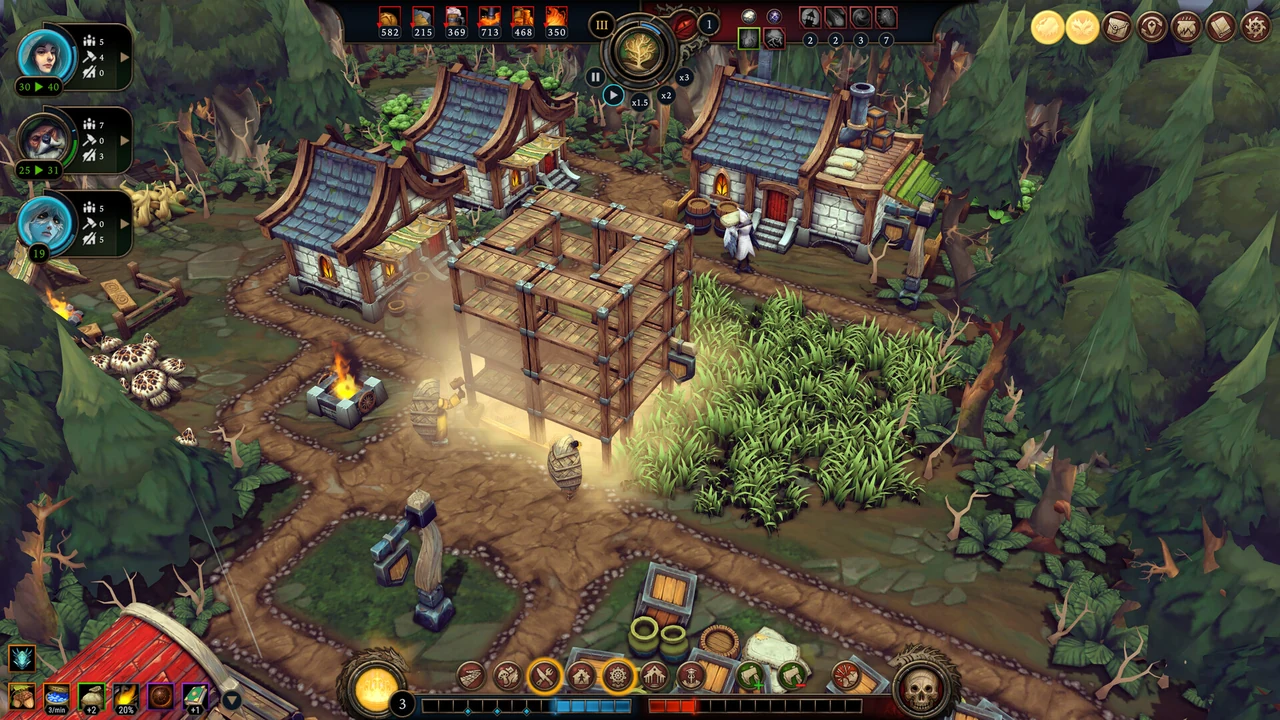
Against the Storm begins where many settlement games are most interesting: a small group has limited supplies, uncertain opportunities and an urgent need to establish a working economy. Different populations bring different requirements and productive strengths, while the available building options encourage a response to the current expedition rather than a memorised universal layout. Opening the forest creates opportunities but also new obligations, so expansion has to be considered alongside the settlement's ability to cope. The first useful habit is to inspect what the community actually has before deciding what it ought to become. Orders and the queen's impatience give development a direction beyond accumulating a larger town. The opening is therefore an exercise in practical improvisation: find a manageable route to the required reputation using the people, resources and production choices that this particular settlement can support.
Progress beyond a single town
The repeated-settlement structure keeps early economic decisions relevant. Instead of spending an entire campaign maintaining one enormous city, the player repeatedly works through the productive uncertainty of getting established. Persistent development gives these projects a shared context, but each new location still asks for a fresh operating plan. Population needs, production chains and available resources interact closely enough that a useful building can solve several problems or create an expensive dependency. The forest also makes expansion a meaningful commitment rather than a purely positive increase in territory. This is an excellent fit for builders who enjoy adaptation more than following a fixed construction order. The game asks what can work here, with these materials and these residents. That emphasis turns settlement design into a recurring act of judgement, supported by a wider campaign without being swallowed by it.
A readable purpose beneath the fantasy
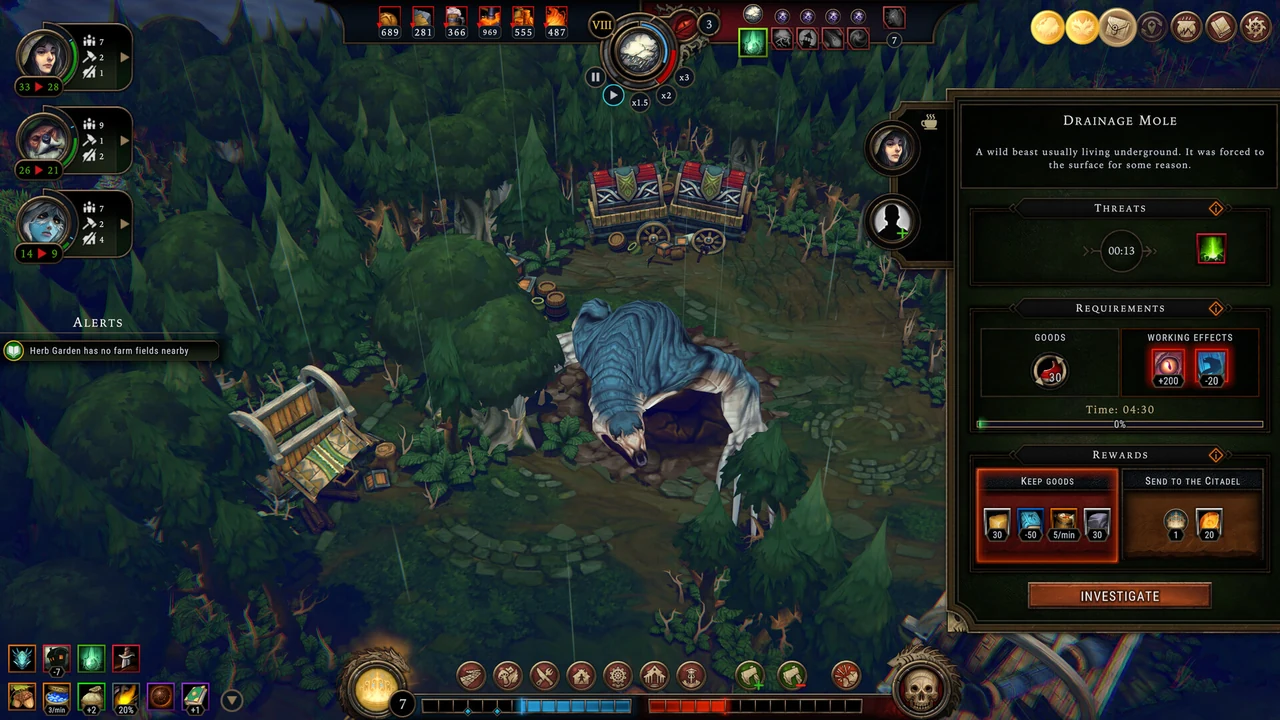
Frequent rebuilding will divide city-building fans. Players who become attached to one carefully developed place may dislike leaving a successful economy behind to establish another community. The persistent layer supplies continuity, but it does not provide the same feeling as inhabiting a single evolving city. The number of connected demands also makes casual experimentation difficult. A new production line can depend on ingredients, labour and consumption priorities that are easy to underestimate when several groups need attention at once. The pressure of impatience gives indecision a cost, so learning a system can feel urgent rather than leisurely. There is room for planning, but comparatively little room for treating every project as a decorative sandbox. Against the Storm is most rewarding when the pleasure lies in making a viable arrangement from constraints, including constraints that change between expeditions.
A strong choice for adaptive planners
Choose Against the Storm if the opening phase of a management game is usually your favourite part. It suits builders who enjoy turning a limited assortment of resources and abilities into a coherent production plan, then testing that plan against changing needs. The varied settlements reward flexibility and discourage treating one layout as a permanent answer. Players who prefer developing a single city indefinitely should weigh that structure carefully. The campaign connects projects, but the individual settlement remains a project with a purpose. It is also a strong choice for readers who like distinct populations to affect practical decisions rather than serve as visual variety. Bring an appetite for adaptation and close attention to dependencies. The game repeatedly provides a new economic brief and enough interacting tools to make solving that brief feel like genuine construction work.
The verdict
A rich settlement manager that keeps the difficult establishment phase at the centre. Varied populations and production options reward adaptable plans, provided repeated rebuilding is part of the appeal.
Reasons to play
- Fresh settlements make early economic choices matter repeatedly
- Population needs give production plans a useful human dimension
- Available resources encourage improvisation over fixed layouts
Reasons to think twice
- Successful towns are projects rather than permanent homes
- Several dependencies can make experimentation feel pressured
See the game
Assist & accessibility
Parents’ guide
Players: Single-player. Includes optional in-game purchases.
Age classification: 12. Bad Language · In-Game Purchases Steam UK listing
A useful starting tip
Plan around the populations and production options you actually receive rather than forcing the same settlement blueprint every time.
A different direction
Compare this with Frostpunk: A powerful survival city builder where infrastructure and social policy are inseparable. Its coherent pressures make construction consequential, but the bleak tone leaves little room for carefree development.
Official sources
Reviewed: November 2026
You might also like
 DorfromantikRead review →
 Into the BreachRead review →
 Chicory: A Colorful TaleRead review →