PROJECT INSPECTION / SANDBOX TRAIL GUIDE
FTL: Faster Than Light
A superb management game about operating the machine you have assembled. Crew, power and equipment form clear dependencies, with campaign uncertainty and permanent defeat giving every improvement real stakes.
DEVELOPED BYSubset Games

Game facts
- Developer
- Subset Games
- Publisher
- Subset Games
- Released
- 14 September 2012
- Platforms
- Windows · macOS · Linux (Steam edition)
- Model
- Paid game
- PEGI
- 12 · Bad Language — Steam UK listing
- Players
- Single-player
- Length
- Medium
- Difficulty
- 4 / 5 · Demanding
- Steam Deck
- Playable
PEGI source ↗ · Steam Deck status source ↗
Edition: Base game
The score, explained
The interest and responsiveness of the core decisions and actions.
How progression, exploration and goals fit together.
The coherence of the visual, musical and narrative presentation.
How clearly the game explains its rules and offers useful ways to engage.
The depth of optional goals, alternative approaches and reasons to return.
Captain a collection of competing needs
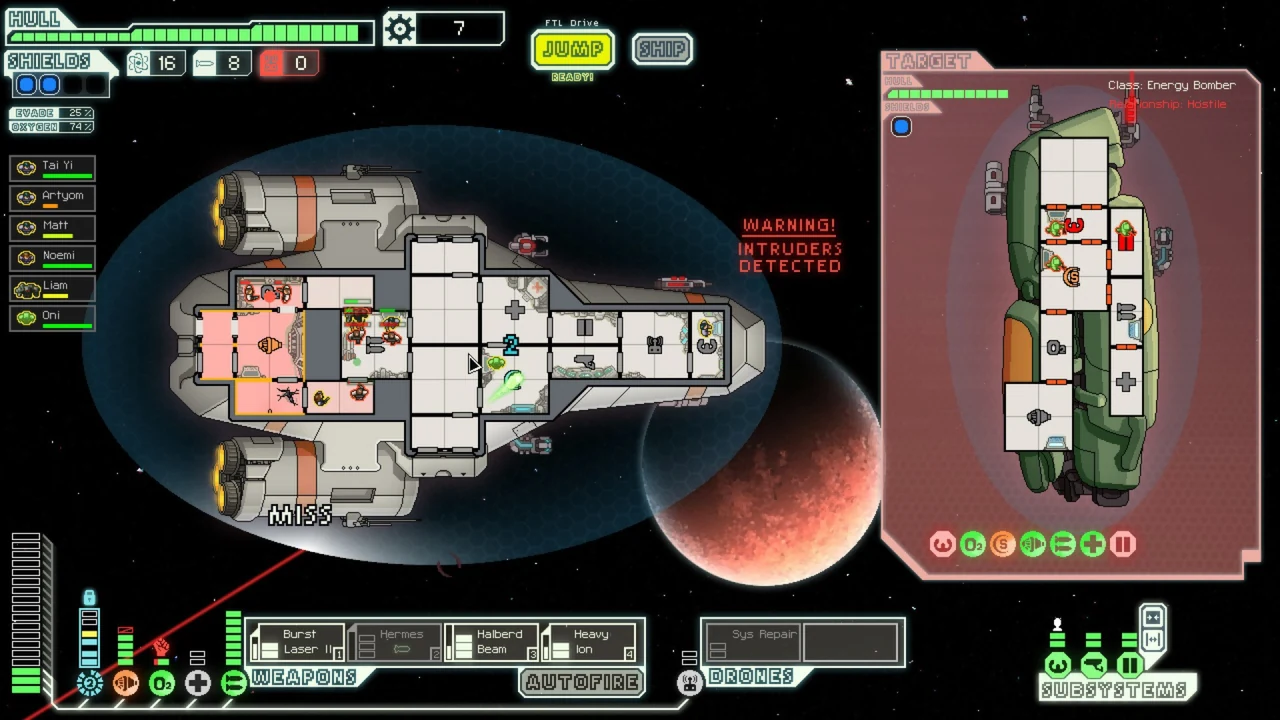
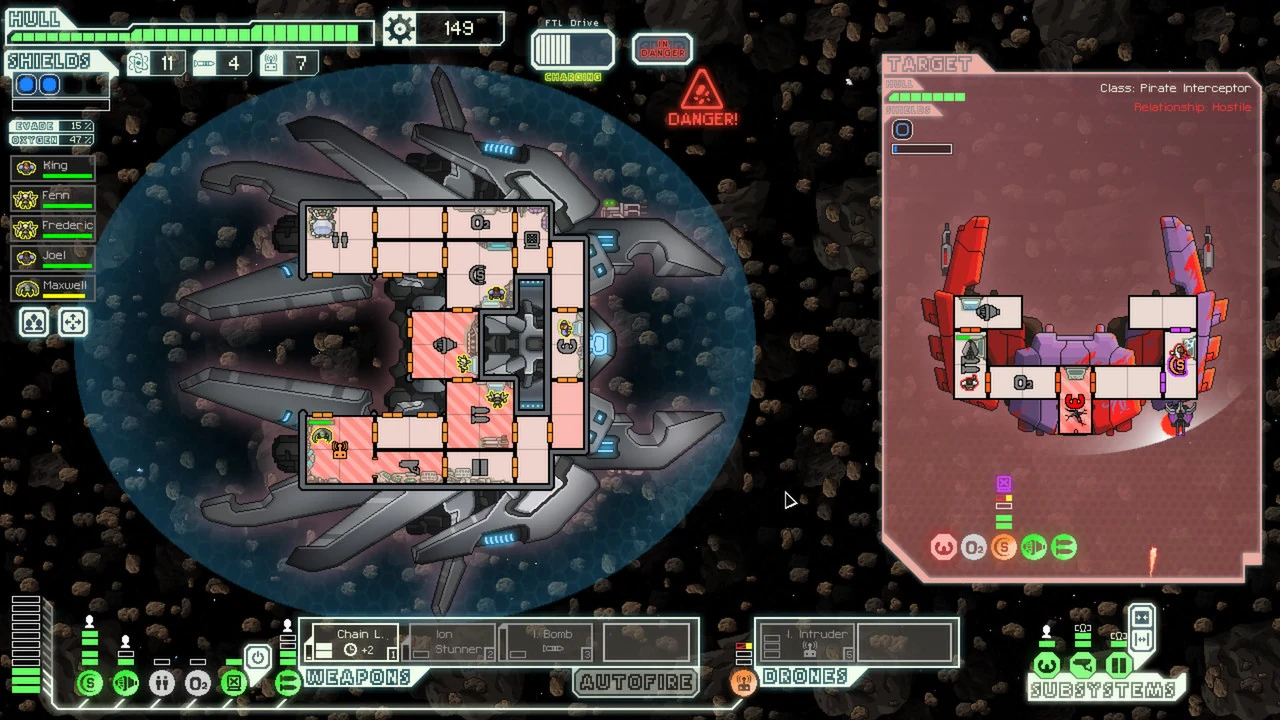
FTL puts a mobile operating system under the player's care. The ship has crew, rooms, power demands and equipment, and the opening encounters quickly show how a problem in one area can affect the rest. Combat can be paused to issue commands, making attention and priorities more important than constant speed. A damaged system may need a crew member, but moving that person can leave another function less effective. Between encounters, route choices and scarce supplies shape the ship's prospects. The first stage teaches the player to consider the vessel as a set of dependencies rather than a single health bar. Upgrades are part of that same process: a new weapon is useful only if the ship can power it and survive long enough to benefit. The expedition begins as a small engineering problem that keeps acquiring new emergencies.
An expedition that accumulates consequences
The ship's visible layout gives management decisions a concrete form. Crew must occupy real rooms, damage can disable particular functions, and distributing power changes what the vessel can do at a critical moment. Pausing supports deliberate diagnosis when several problems happen together. This makes a successful response feel constructed: redirect power, assign repairs, choose a target and preserve the systems that keep the ship viable. Equipment and ship variants alter the available solutions, so a familiar encounter can require a different plan. The route between battles also matters because supplies and event choices influence the next stage of the expedition. FTL is compelling for a systems-minded player precisely because the design remains vulnerable. Building a capable ship does not remove the need to operate it intelligently; it creates a more interesting set of options when something goes wrong.
A ship you can read as a system
The expedition's uncertainty can undermine a carefully preferred build. Shops, events and encounter conditions do not guarantee the equipment or opportunities that would complete a particular plan. Adaptation is therefore essential, but it can still feel disappointing when a promising ship loses access to the improvement it needs. Permanent defeat also makes the cost of a bad judgement substantial. The pause function helps organise decisions without eliminating the difficulty of recognising which emergency matters most. Players interested mainly in freely designing a vessel may find the campaign too restrictive, since the ship must be improved from the available choices while continuing to survive. FTL offers operational ownership rather than an unrestricted construction editor. Its satisfaction depends on accepting risk, incomplete control and the possibility that a well-developed arrangement can still fail before reaching its destination.
Choose it for uncertain expeditions
FTL is a strong recommendation for players who enjoy keeping an interconnected machine alive. Choose it for the relationship between design and operation: improvements create possibilities, but crew assignments, power distribution and priorities determine whether those possibilities help during an emergency. It suits a patient decision-maker who appreciates pausing to reconsider a situation rather than relying entirely on reflexes. Builders who need predictable access to every component or a permanent project that cannot be lost should consider those differences carefully. The ship is a fragile expedition, and the campaign continually asks whether its current arrangement is sufficient. For readers comfortable with that uncertainty, the game offers an unusually satisfying kind of management. Every component has a practical role, and preserving the whole vessel requires understanding how those roles depend on one another when conditions become difficult.
The verdict
A superb management game about operating the machine you have assembled. Crew, power and equipment form clear dependencies, with campaign uncertainty and permanent defeat giving every improvement real stakes.
Reasons to play
- A visible ship layout makes system dependencies tangible
- Pausing allows careful diagnosis of overlapping emergencies
- Equipment choices must fit the vessel's broader operating plan
Reasons to think twice
- A preferred build depends on uncertain opportunities
- Permanent defeat can end a carefully developed expedition
See the game
Assist & accessibility
Explore the available settings and control options on the official game page before choosing your setup.
Parents’ guide
Players: Single-player. No in-game purchase marker in the checked Steam listing. Separate downloadable content may be sold.
Age classification: 12. Bad Language Steam UK listing
A useful starting tip
Pause when several systems fail at once, then decide which problem threatens the whole ship before assigning every crew member a separate repair.
A different direction
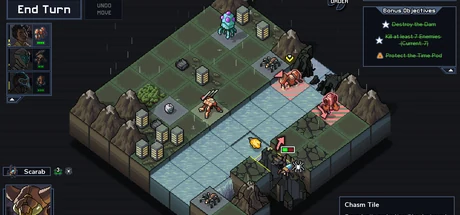
Compare this with Into the Breach: A concentrated exercise in making a small toolkit protect a larger system. Squad coordination and limited actions deliver constructive satisfaction, with tactical consequences that demand difficult compromises.
Official sources
Reviewed: November 2026
You might also like
 DorfromantikRead review →
 Into the BreachRead review →
 Chicory: A Colorful TaleRead review →